


Hey there! As a custom cold foil supplier, I often get asked a really interesting question: "Can custom cold foil be used on curved surfaces?" Well, let's dive right into this topic and find out.
First off, for those who might not be super familiar with custom cold foil, it's an amazing way to add a touch of luxury and eye - catching appeal to various products. We've got stuff like Cold Foil for Light Gold Label, Gold Cold Stamping Foil, and Cold Stamping Foil for Paper in our range. It's used in all sorts of industries, from packaging to branding.
Now, back to the main question. Using custom cold foil on curved surfaces is definitely a challenge, but it's not impossible. There are a few factors we need to consider.
Material Compatibility
The first thing we have to think about is the material of the curved surface. Different materials react differently to cold foil application. For example, if the surface is made of plastic, it might be more flexible, which can be both good and bad. On one hand, a flexible plastic surface can conform a bit to the cold foil during the application process. But on the other hand, certain plastics might not have the right surface tension for the foil to adhere properly.
Metallic curved surfaces also present their own set of issues. Metals can be smooth and non - porous, which can make it difficult for the cold foil adhesive to stick. However, with the right pre - treatment and a high - quality adhesive in our custom cold foil, we can often achieve a good bond.
Paper and cardboard curved surfaces are a bit more forgiving. They are porous, which allows the adhesive in the cold foil to soak in a bit and create a strong bond. But they can also be more prone to damage during the application process, especially if the curve is very tight.
Foil Flexibility
The flexibility of the custom cold foil itself is crucial when it comes to using it on curved surfaces. Our cold foils are designed with different levels of flexibility. For tight curves, we need a foil that can bend and conform without cracking or peeling.
If the foil is too rigid, it will just break when you try to apply it to a curved surface. That's why we've spent a lot of time in the lab, developing foils that can handle different degrees of curvature. We test them on all sorts of curved samples, from gently curved bottles to sharply curved product edges.
Application Method
The way we apply the custom cold foil also matters a great deal. There are a few different methods, and each has its own pros and cons when it comes to curved surfaces.
One common method is the roll - to - roll application. This works well for long, gently curved surfaces like the sides of cylindrical containers. The foil is fed through a machine in a continuous roll, and as it passes over the curved surface, pressure is applied to adhere it. However, this method might not be suitable for surfaces with complex curves or multiple bends.
Another method is the sheet - to - sheet application. This is more versatile for irregularly shaped curved surfaces. We cut the foil into sheets and then apply them one by one. This allows for more precision, but it can be a bit more time - consuming.

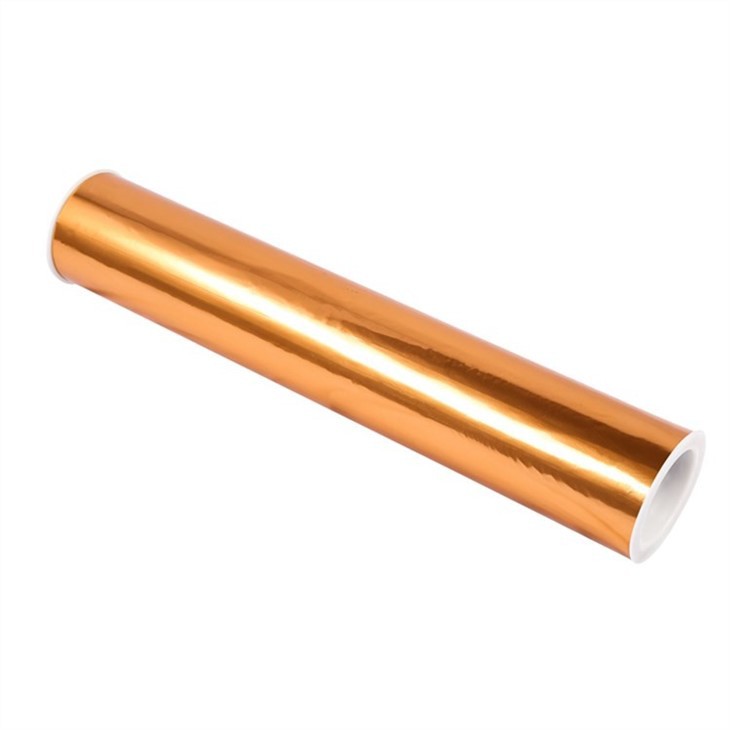
We've also been exploring new application techniques, like using a robotic applicator. A robotic arm can be programmed to follow the exact contour of a curved surface, applying the foil with great accuracy. This is especially useful for high - end products where a perfect finish is essential.
Examples of Successful Applications
We've had some really cool projects where we've used custom cold foil on curved surfaces. One of our clients was a perfume brand. They wanted to add a touch of luxury to their perfume bottles, which had a gently curved shape. We used our Gold Cold Stamping Foil and applied it using the roll - to - roll method. The result was stunning. The gold foil added a beautiful shine to the bottles, making them stand out on the shelves.
Another client was a food packaging company. They had a cardboard box with a slightly curved corner. We used our Cold Stamping Foil for Paper and applied it using the sheet - to - sheet method. The foil adhered well to the paper, and it added a nice decorative element to the packaging.
Challenges and Solutions
Of course, we've also faced our fair share of challenges. One of the biggest problems we've encountered is air bubbles getting trapped between the foil and the curved surface. This can happen when the application process isn't smooth enough. To solve this, we've developed special application techniques that minimize the risk of air bubbles. For example, we use a squeegee - like tool to smooth out the foil as it's being applied, pushing out any air that might be trapped.
Another challenge is the durability of the cold foil on curved surfaces. Over time, the foil might start to peel or crack, especially if the surface is exposed to a lot of handling or environmental factors. To combat this, we've improved the adhesive in our foils and added protective coatings. These coatings help to make the foil more resistant to wear and tear, ensuring a long - lasting finish.
Conclusion
So, can custom cold foil be used on curved surfaces? The answer is yes! With the right combination of material compatibility, foil flexibility, and application method, we can achieve great results. Whether it's a small, intricately curved product or a large, gently curved container, our custom cold foils can add that extra touch of elegance and appeal.
If you're interested in using custom cold foil for your curved surface projects, we'd love to hear from you. We can work with you to find the perfect solution for your specific needs. Just reach out to us, and let's start a conversation about how we can make your products shine.
References
- Packaging Industry Journal, various issues on cold foil applications
- Technical reports from our in - house R & D department on cold foil flexibility and adhesion