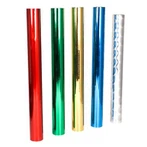
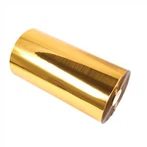
As early as the 1930s, people did use gold or silver to make bronzing. Because of its stable chemical properties, and it is not easy to oxidize in the air, using their good ductility, they can be made into extremely thin metal foils by beating and rolling, and then coated with shellac (dry glue) or protein glue on one side. , and then used for hot stamping.
In the modern hot stamping process, gold foil has been replaced by "anodized aluminum". Due to the low cost of anodized aluminum and its good metallic luster, anodized aluminum hot stamping has developed rapidly and been widely used, but it is still called "anodized aluminum" in habit. Bronzing".
"Aluminum" is a silver-white metal that can only be imitated by hot stamping with silver foil. If you want to appear golden yellow like gold foil, you only need to apply a layer of gold dye. In addition, red, green, blue and other dyes can be added to make the anodized aluminum more colorful.
The modern hot stamping method can make the surface of the printed matter have a variety of metal texture patterns at the same time, and can also combine different hot stamping effects. In addition to its surface decoration function, hot stamping also has another important function of anti-counterfeiting. Now we can see that there are many documents or certificates that use hot stamping and holographic hot stamping as anti-counterfeiting means. Many packaging boxes that require anti-counterfeiting, in addition to using gold foil for surface finishing, also use holographic patterns for anti-counterfeiting.
The unique metallic luster and strong visual effect of hot stamping can make the decorated products look extraordinarily unique. Many people will use hot stamping to make slight changes on the business cards. It can show a beautiful and unique feeling if it is used properly. If it is too large Bronzing, under poor design, it is easy to look tacky. Large numbers are not necessarily beautiful, so be careful with your design.