


As a seasoned supplier of China Textile Transfer Foil, I often encounter inquiries regarding the transfer time of our products. This crucial aspect can significantly impact production schedules and overall business efficiency for our clients in the textile industry. In this blog, I'll delve into the factors that influence the transfer time of China Textile Transfer Foil and provide insights to help you better understand this process.

Understanding Textile Transfer Foil
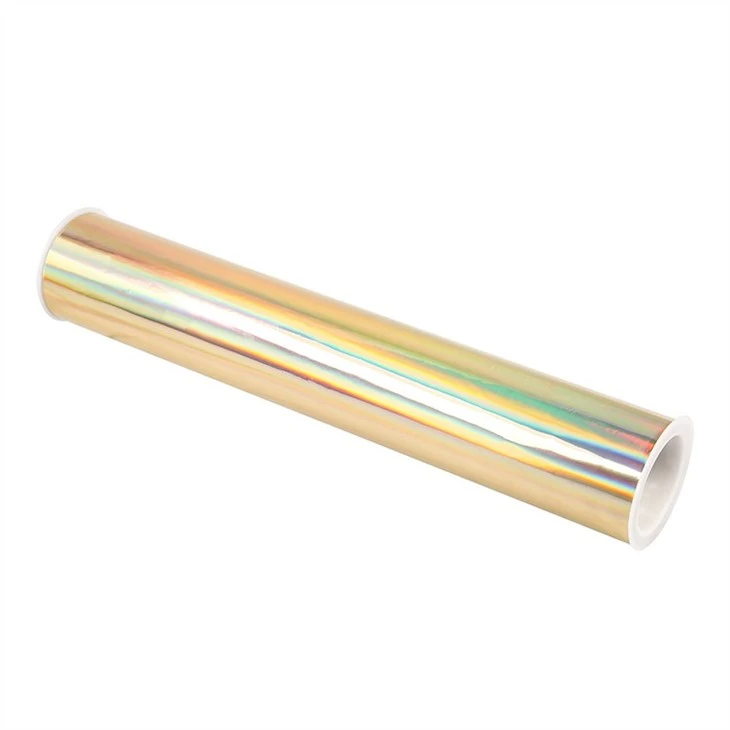
Before diving into the transfer time, it's essential to have a basic understanding of textile transfer foil. Textile transfer foil is a thin sheet of material coated with various pigments, dyes, or metallic substances. It is used to transfer decorative designs, patterns, or colors onto textile fabrics through a heat and pressure process. This technique offers a cost - effective and versatile way to add aesthetic value to textiles, making it popular in fashion, home decor, and industrial applications.
Factors Affecting Transfer Time
- Foil Type and Composition
- Different types of textile transfer foils have varying transfer times. For instance, Hot Stamping Foil for Leather is specifically designed for leather materials. Its composition may include a special adhesive layer and pigments that require a certain amount of heat and time to bond effectively with the leather surface. Generally, foils with more complex compositions or those designed for difficult - to - adhere materials may take longer to transfer.
- Hot Stamping Foil PET 12 Micron is made from a 12 - micron thick PET (polyethylene terephthalate) base. The thickness and properties of the PET base can influence the transfer time. Thinner foils may transfer more quickly as they require less heat penetration, while thicker foils might need a longer exposure to heat and pressure to ensure a complete transfer.
- Holographic Hot Stamping Foil has a unique holographic effect created by special manufacturing processes. The holographic elements may need more precise heat and pressure conditions, which can lead to a slightly longer transfer time compared to regular foils.
- Textile Material
- The type of textile fabric plays a significant role in determining the transfer time. Natural fibers like cotton, silk, and wool have different heat - absorption and moisture - retention properties compared to synthetic fibers such as polyester, nylon, and acrylic. For example, cotton is a breathable and absorbent fabric. It may require a longer transfer time as the heat needs to penetrate through the fabric's fibers to activate the adhesive on the foil. On the other hand, synthetic fibers often have a more uniform structure and may transfer the foil more quickly.
- The thickness and density of the textile also matter. Thicker and denser fabrics will generally take longer to transfer the foil because the heat has to reach the inner layers of the fabric to ensure proper adhesion.
- Transfer Equipment
- The quality and type of transfer equipment used can greatly affect the transfer time. Professional hot stamping machines are designed to provide precise control over heat, pressure, and time. High - end machines can often achieve faster transfer times while maintaining high - quality results. In contrast, older or less - advanced equipment may require longer transfer times to compensate for their lack of precision.
- The size and design of the transfer area also influence the transfer time. Larger transfer areas may need more time to ensure that the entire area receives sufficient heat and pressure for a uniform transfer. Complex designs with fine details may require a slower transfer process to accurately reproduce the pattern.
Typical Transfer Time Ranges
In general, the transfer time for China Textile Transfer Foil can range from a few seconds to several minutes. For simple designs on thin synthetic fabrics using standard transfer equipment, the transfer time may be as short as 2 - 5 seconds. This is common in high - volume production environments where efficiency is crucial.
However, for more complex designs, thicker fabrics, or specialized foils, the transfer time can extend to 10 - 30 seconds or even longer. For example, when using Holographic Hot Stamping Foil on a thick woolen fabric, a transfer time of 20 - 30 seconds may be necessary to achieve a clear and durable holographic effect.
Optimizing Transfer Time
- Pre - testing
- Before starting large - scale production, it is highly recommended to conduct pre - tests on sample fabrics. This allows you to determine the optimal heat, pressure, and transfer time settings for your specific combination of foil and textile. By making small adjustments during the pre - testing phase, you can significantly reduce the transfer time during actual production.
- Equipment Maintenance
- Regular maintenance of your transfer equipment is essential. Clean the heating elements, pressure pads, and other components to ensure they are functioning properly. Well - maintained equipment can provide consistent heat and pressure, which helps to minimize transfer time and improve the quality of the transfer.
- Operator Training
- Properly trained operators can play a crucial role in optimizing transfer time. They should be familiar with the operation of the transfer equipment, understand the characteristics of different foils and fabrics, and be able to make quick adjustments when necessary. Training programs can help operators become more efficient and reduce the likelihood of errors that could lead to longer transfer times.
Conclusion
The transfer time of China Textile Transfer Foil is influenced by multiple factors, including foil type, textile material, and transfer equipment. By understanding these factors and taking appropriate measures to optimize the transfer process, you can achieve faster transfer times without sacrificing the quality of the final product.
If you are in the market for high - quality textile transfer foil and want to discuss the transfer time and other aspects of our products, we are here to help. Whether you have a specific project in mind or need general advice on textile decoration, feel free to reach out to us for a detailed consultation. We look forward to partnering with you to meet your textile transfer needs.
References
- "Textile Printing and Dyeing Technology" - A comprehensive textbook on textile processing techniques.
- Industry reports on textile transfer foil manufacturing and application.