


What is the R & D Investment of a Lamination Film Factory?
As a supplier to a lamination film factory, I've witnessed firsthand the significance and complexity of research and development (R & D) investment in this industry. Lamination films are used in a wide range of applications, from packaging to electronics, and the market demands continuous innovation to meet evolving customer needs and industry standards. In this blog, I'll delve into what R & D investment entails for a lamination film factory and why it's crucial for long - term success.
The Scope of R & D in a Lamination Film Factory
R & D in a lamination film factory encompasses several key areas. One of the primary focuses is on material innovation. Lamination films are made from various polymers, and finding new materials or improving existing ones can lead to better performance. For example, developing a film with enhanced barrier properties can extend the shelf - life of packaged products. This might involve researching new types of resins or additives that can be incorporated into the film during the manufacturing process.
Another important aspect is process improvement. The production of lamination films involves complex manufacturing processes such as extrusion, coating, and lamination itself. Investing in R & D to optimize these processes can increase efficiency, reduce waste, and improve product quality. For instance, by developing a more precise extrusion process, the factory can produce films with more consistent thickness and better mechanical properties.
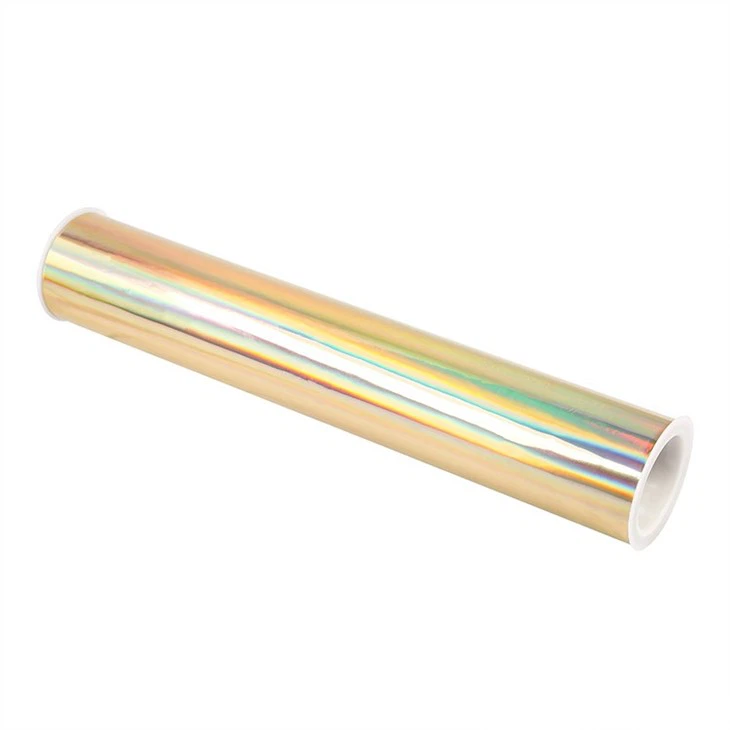
Product customization is also a significant part of R & D. Customers in different industries have unique requirements for lamination films. Some may need films with specific colors, textures, or adhesion properties. A lamination film factory needs to invest in R & D to develop customized solutions that meet these diverse needs. For example, the Brushed Color Metalized PET Film is a product that combines the aesthetic appeal of a brushed finish with the functionality of metalized PET, catering to customers who are looking for both visual and performance features in their packaging.
Factors Influencing R & D Investment
Several factors influence the level of R & D investment in a lamination film factory. Market competition is one of the most significant drivers. In a highly competitive market, factories need to continuously innovate to differentiate their products from competitors. If a factory fails to invest in R & D, it may lose market share to those that offer more advanced or customized products. For example, if a competitor develops a Colorful Brushed Film with better colorfastness and durability, other factories will need to invest in R & D to catch up or surpass them.
Technological advancements also play a crucial role. New materials, manufacturing techniques, and testing methods are constantly emerging. A lamination film factory needs to stay up - to - date with these advancements and invest in R & D to incorporate them into its products and processes. For example, the development of nanotechnology has opened up new possibilities for improving the properties of lamination films, such as enhancing their strength and barrier performance at a molecular level.
Regulatory requirements are another factor. As environmental and safety regulations become more stringent, lamination film factories need to invest in R & D to develop products that comply with these regulations. This may involve finding alternative materials that are more environmentally friendly or developing processes that reduce emissions and waste.
Measuring the Return on R & D Investment
Measuring the return on R & D investment in a lamination film factory is not straightforward. One way to assess it is through increased sales. If a new product developed through R & D generates significant sales, it indicates a positive return on investment. For example, the 12 - 100micron Metallized Lamination Film may have been developed after significant R & D efforts, and if it gains popularity in the market and leads to an increase in sales revenue, it shows that the investment was worthwhile.
Improved production efficiency can also be a measure of return on R & D investment. If a process improvement developed through R & D reduces production costs, such as by reducing energy consumption or waste, it contributes to the overall profitability of the factory.
Enhanced brand reputation is another intangible but important benefit. When a lamination film factory is known for its innovative products and high - quality R & D, it can attract more customers and build long - term relationships. This can lead to increased market share and higher customer loyalty, which ultimately translate into financial returns.
Challenges in R & D Investment
Despite the potential benefits, there are several challenges associated with R & D investment in a lamination film factory. One of the main challenges is the high cost. R & D activities require significant financial resources, including investment in equipment, personnel, and research facilities. For a small or medium - sized factory, these costs can be a significant burden.
Another challenge is the long - term nature of R & D. Developing new products or improving processes can take years, and there is no guarantee of success. There is always a risk that the R & D efforts may not yield the expected results, which can lead to wasted resources.
Talent acquisition and retention are also challenges. R & D in the lamination film industry requires a team of highly skilled scientists, engineers, and technicians. Finding and retaining these professionals in a competitive job market can be difficult, especially for factories located in areas with limited access to talent.

The Future of R & D in the Lamination Film Industry
The future of R & D in the lamination film industry looks promising. With the increasing demand for sustainable and high - performance products, factories will need to invest more in R & D to meet these trends. For example, there will be a growing focus on developing biodegradable and recyclable lamination films to address environmental concerns.
The integration of digital technologies such as artificial intelligence and the Internet of Things (IoT) into the manufacturing process will also be an area of R & D. These technologies can be used to optimize production processes, improve quality control, and develop more intelligent products.
In conclusion, R & D investment is essential for the survival and growth of a lamination film factory. It enables factories to develop innovative products, improve production processes, and meet the diverse needs of customers. As a supplier, I understand the importance of supporting the R & D efforts of the factories I work with. If you are interested in our lamination film products or want to discuss potential R & D - driven solutions for your specific needs, I encourage you to reach out for a procurement discussion.
References
- Industry reports on the lamination film market
- Academic research papers on polymer materials and film manufacturing processes
- Internal records and case studies from lamination film factories