


As a supplier of China cold foil, I am often asked about the electrical conductivity of this product. Cold foil is a versatile material used in various industries, including packaging, printing, and electronics. In this blog post, I will explore the electrical conductivity of China cold foil, its influencing factors, and its potential applications in the field of electronics.
Understanding Cold Foil
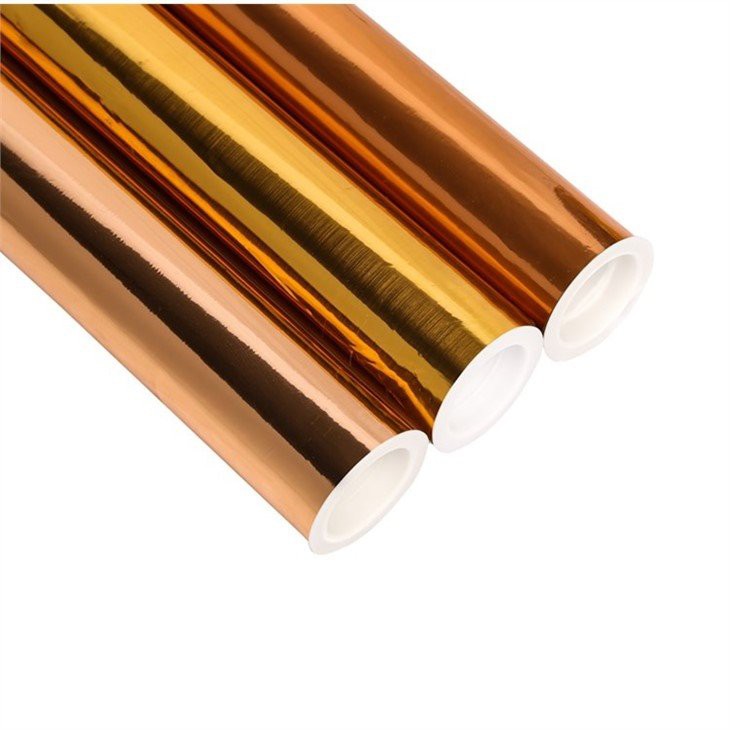
Cold foil is a type of metallic foil that can be transferred onto a substrate without the use of heat. It is typically made up of several layers, including a carrier film, a release layer, a metallic layer, and an adhesive layer. The metallic layer is what gives cold foil its characteristic shine and color, and it is usually made of aluminum, gold, silver, or other metals.
Electrical Conductivity of Cold Foil
The electrical conductivity of cold foil depends on several factors, including the type of metal used in the metallic layer, the thickness of the metallic layer, and the quality of the manufacturing process.
Type of Metal
Aluminum is one of the most commonly used metals in cold foil due to its low cost, high reflectivity, and good electrical conductivity. Aluminum has an electrical conductivity of approximately 3.5 x 10^7 S/m at room temperature. Gold, on the other hand, is a more expensive option but offers excellent electrical conductivity, with a value of about 4.1 x 10^7 S/m. Silver has the highest electrical conductivity among common metals, with a value of around 6.3 x 10^7 S/m.

Thickness of the Metallic Layer
The thickness of the metallic layer also plays a crucial role in determining the electrical conductivity of cold foil. Generally, a thicker metallic layer will result in higher electrical conductivity. However, increasing the thickness also adds to the cost and may affect the flexibility and transferability of the cold foil.
Manufacturing Process
The quality of the manufacturing process can significantly impact the electrical conductivity of cold foil. A well - controlled manufacturing process ensures a uniform metallic layer, which is essential for consistent electrical performance. Any defects or impurities in the metallic layer can reduce the electrical conductivity.
Measuring the Electrical Conductivity of Cold Foil
There are several methods to measure the electrical conductivity of cold foil. One common method is the four - point probe technique. In this method, four probes are placed on the surface of the cold foil, and a current is passed through the outer two probes. The voltage is then measured across the inner two probes. Using Ohm's law (V = IR), the resistance of the cold foil can be calculated, and from the resistance, the electrical conductivity can be determined.
Applications in Electronics
The electrical conductivity of China cold foil makes it suitable for various applications in the electronics industry.
Printed Circuit Boards (PCBs)
Cold foil can be used in the production of PCBs. It can be transferred onto a substrate to create conductive traces. Compared to traditional methods of creating conductive patterns on PCBs, such as etching copper, using cold foil can be a more cost - effective and environmentally friendly option. For example, Cold Stamping Foil for Paper can be adapted for use in PCB manufacturing, providing a thin and flexible conductive layer.
Flexible Electronics
With the growing demand for flexible electronics, cold foil offers a promising solution. Its flexibility allows it to be used in applications such as flexible displays, wearable devices, and flexible sensors. The Cold Foil for Light Gold Label can be integrated into flexible electronic circuits, providing both aesthetic appeal and electrical functionality.
EMI Shielding
Electromagnetic interference (EMI) shielding is crucial in many electronic devices to prevent interference from external electromagnetic fields. Cold foil with good electrical conductivity can be used as an EMI shielding material. It can be applied to the enclosure of electronic devices to block or reduce the penetration of electromagnetic waves. The Gold Cold Stamping Foil can be an effective choice for EMI shielding due to its high electrical conductivity and attractive appearance.
Advantages of Using China Cold Foil in Electronics
There are several advantages to using China cold foil in electronics applications. Firstly, China is a major producer of cold foil, which means that there is a large supply and competitive pricing. Secondly, Chinese manufacturers often have advanced production technologies and strict quality control systems, ensuring high - quality cold foil products. Thirdly, China cold foil can be customized according to the specific requirements of different electronic applications, such as different metal types, thicknesses, and sizes.
Conclusion
The electrical conductivity of China cold foil is an important property that opens up a wide range of applications in the electronics industry. The type of metal, thickness of the metallic layer, and manufacturing process all influence its electrical conductivity. By carefully selecting the appropriate cold foil and leveraging its electrical properties, electronics manufacturers can benefit from cost - effective, flexible, and high - performance solutions.
If you are interested in purchasing China cold foil for your electronics or other applications, I encourage you to contact me for more information and to discuss your specific requirements. We can work together to find the best cold foil solution for your needs.
References
- "Electrical Conductivity of Metals" - Physics textbooks
- Industry reports on cold foil manufacturing and applications in electronics.